
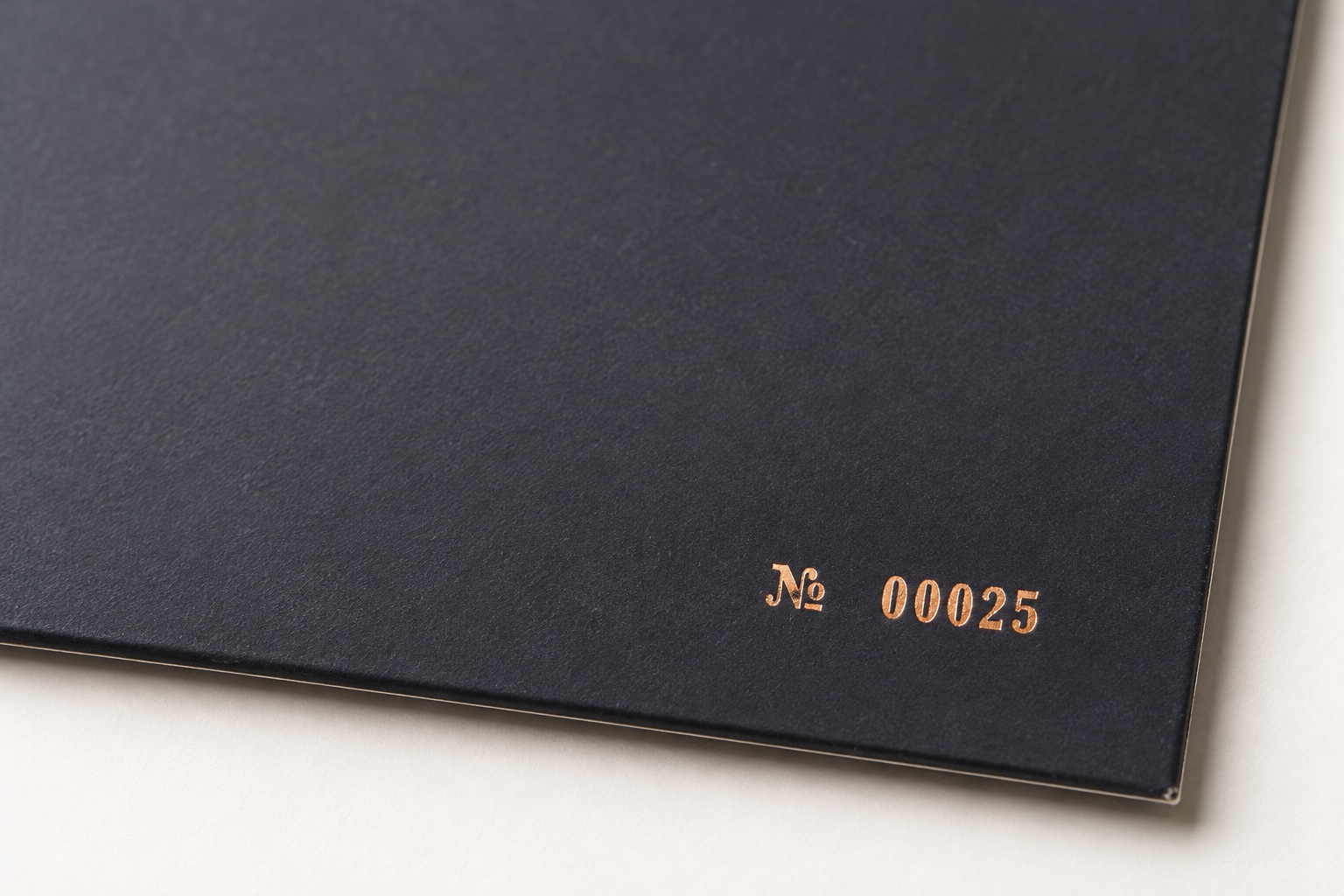
The opening image is a generated illustration based on a reference photograph of our own foil numbering: a small copper-gold serial number in the bottom-right corner of the jacket.
A small detail in the corner of a record jacket: № 00025. Copy number twenty-five. The music is the same, yet there is something satisfying about knowing exactly which copy is sitting on your shelf. Numbering makes a release feel personal and gives each copy its own identifier.
It works beautifully for a debut album, an anniversary reissue or a limited colour variant. It can be a quiet detail on the back or an integral part of the artwork. At Hanaton, you can choose handwritten numbering, numbered stickers or foil-stamped numbers. Each has its own character; foil stamping is our favourite.
Hand-numbered: a little different on every copy
Handwritten numbers feel immediate and personal. Small variations become part of the release, especially when paired with a signature or a handwritten message. They can suit an intimate acoustic record just as well as a raw, self-released punk album.
Leave space for the number in your artwork. The pen needs to write clearly on the chosen surface without smudging once dry. Light or metallic ink can look great on a dark jacket, but the paper and finish make a difference, so testing matters. With a longer run, consistent formatting and careful checking are particularly important.
Numbered stickers: a graphic detail of their own
A sticker offers a neat, consistent appearance and can become a small design element in its own right. It might carry just the number or include a short reference to the limited edition. It can also be added to an existing jacket design without reworking the entire layout.
Placement matters. A sticker on the outer shrink wrap may disappear when the listener opens the record. If you want the number to remain with the copy, plan a spot on the jacket or on an insert intended to be kept. The sticker material, adhesive and jacket finish all influence the result.
Foil-stamped numbering: a detail that catches the light
Foil-stamped numbers become part of the jacket surface. Metallic gold or silver catches the light differently from the surrounding print: move the sleeve and the reflection changes. The number does not have to be large to make an impression. A small, carefully positioned detail can give the whole edition an elegant finish.
Our opening illustration shows this contrast: a dark matte surface with small copper-gold digits in the “№ 00025” format. Our foil stamping produces the individual serial number only; we cannot foil-stamp an edition total after a slash. The actual result depends on the board, coating, foil and size of the lettering. We select these for your own jacket; the illustration is a visual example, not an automatic production specification.
How does foil numbering work?
- We plan the position and format. For example, № 00025. We agree on the size, placement and desired foil finish.
- We check the jacket material. The foil needs to bond properly to the selected surface, with clean, readable details.
- Heat and pressure transfer the foil layer. A heated numbering element presses through the foil against the board. The decorative layer bonds to the jacket where the digits make contact.
- The next jacket receives the next number. A suitable numbering tool or interchangeable digits provide the changing numbers; the exact setup is chosen for the job.
- We check the sequence and finish. Legibility, foil coverage and placement matter, as do missing or duplicated numbers.
Foil stamping can leave a slight impression in the board, but it is not the same as embossing. The numbers are not necessarily raised: the distinctive effect comes from the metallic finish meeting the paper surface.
Decisions to make before designing
- How many copies belong to the numbered edition? Agree on the quantity of the numbered series and its first and last serial numbers in advance.
- How will colour variants be numbered? Will they share one sequence, or will each start at 001? Make this clear in the release description too.
- Where should the number go? On the back, front, inside or on an insert? Give it a readable position away from folds and trim edges.
- What about additional copies? Agree in advance on how promotional, complimentary and any replacement copies will be marked.
A number does not guarantee that a record will rise in value. It does give collectors a detail to notice, remember and enjoy sharing. Designed together with the jacket, vinyl colour and overall character of the release, it feels like a considered part of the edition.
Planning a numbered release? Tell us the quantity and whether you are considering handwriting, stickers or foil stamping when requesting a quote. If you have not decided yet, we can help find an approach that suits your jacket.
Let’s talk about your record → · Artwork and templates → · Choose your vinyl colour →