
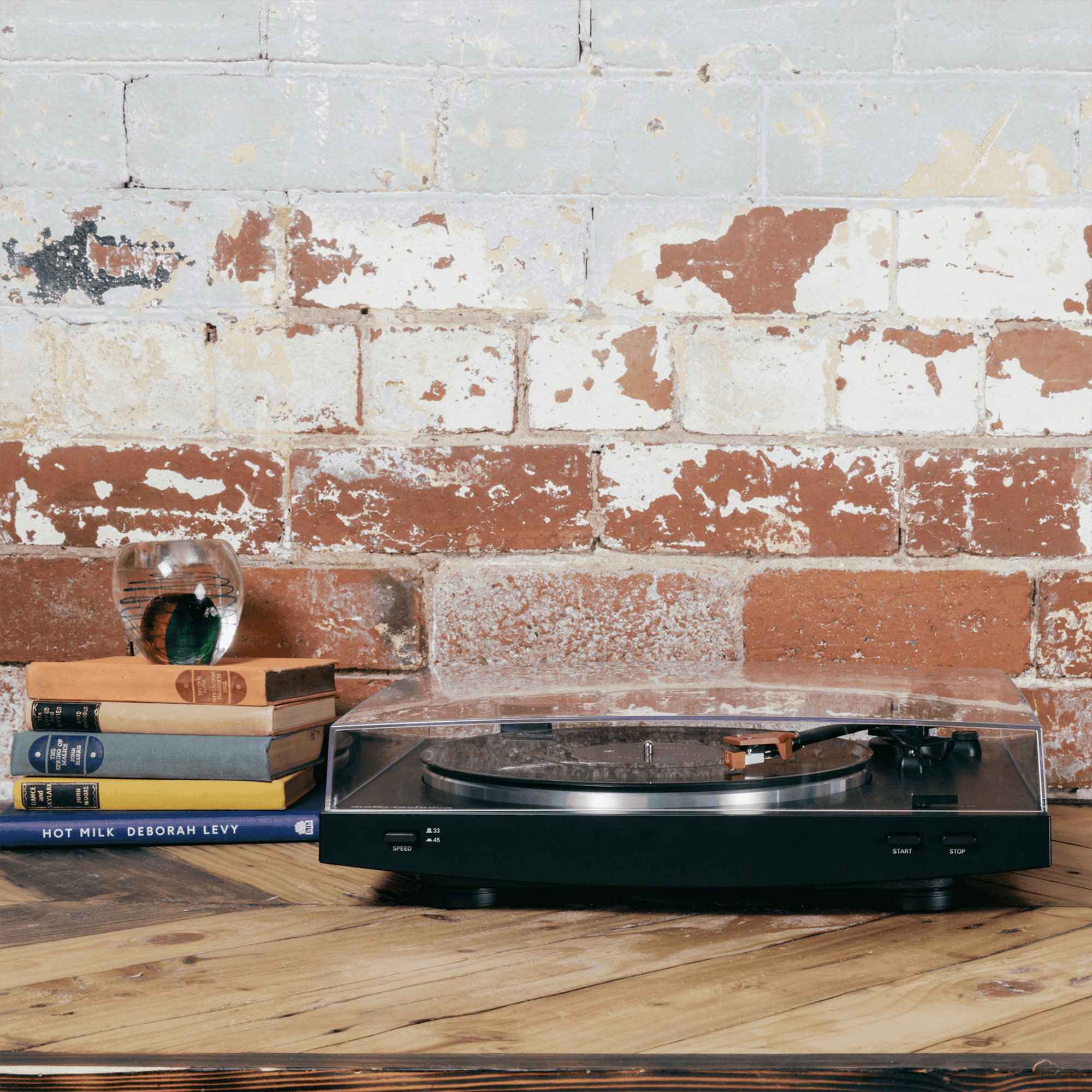
Belt drive or direct drive? It is one of the first questions people encounter when buying a turntable. Both systems can play records reliably and safely. The useful question is how their practical differences fit the way you listen.
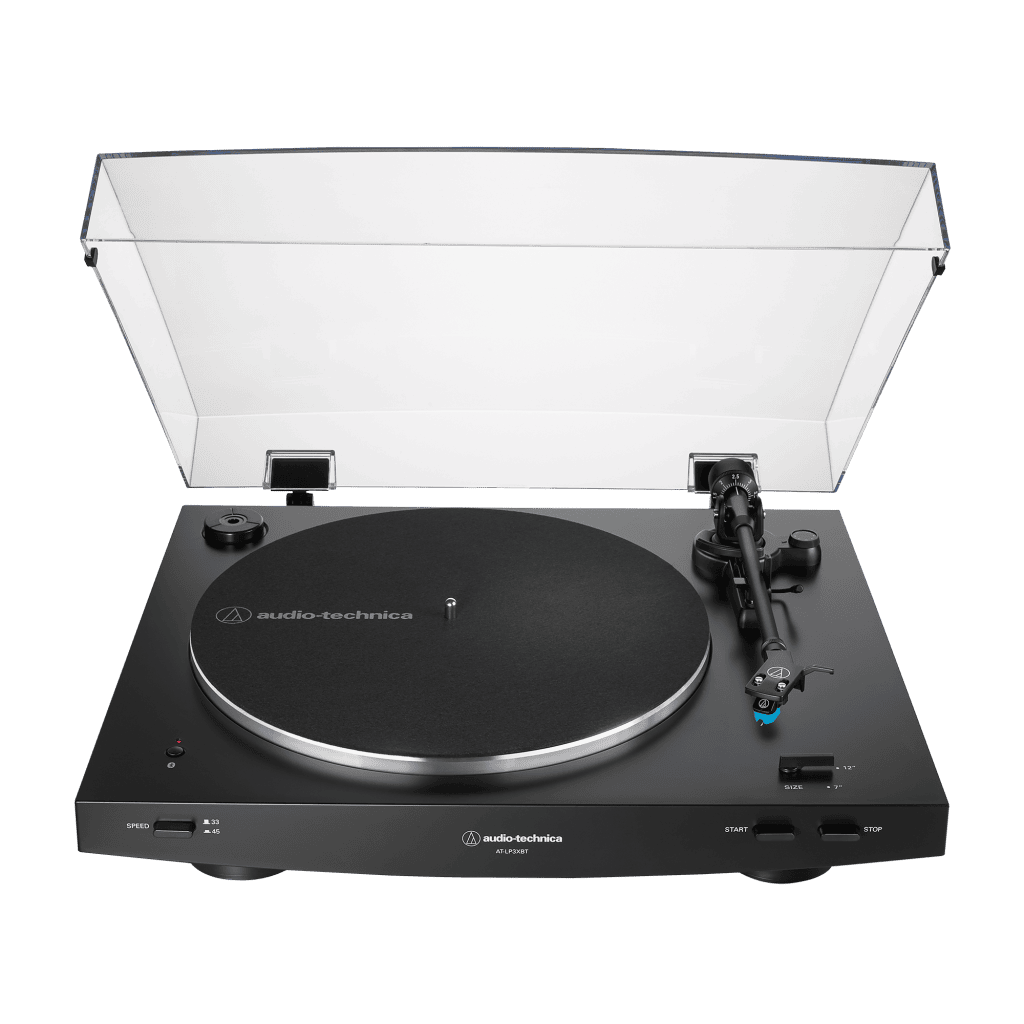
Belt drive: a motor connected by an elastic belt
In a belt-drive player, the motor drives the platter through a belt. Separating the motor from the platter can help reduce the transmission of motor vibration. This is one reason the design is common in home hi-fi turntables.
A belt is also a wearing part. It can stretch or age and eventually need replacement. Starting the platter may take a short moment rather than being instantaneous; the exact behaviour depends on the model. Neither point prevents excellent playback, but both are useful ownership considerations.
The Audio-Technica AT-LP3XBT combines belt drive with fully automatic operation and Bluetooth. It is an example of a player designed around convenient everyday listening rather than manual cueing for every record.
Direct drive: the motor drives the platter directly
A direct-drive design uses the motor to drive the platter without an intermediate belt. Fast starting and stable speed are familiar strengths, particularly in the DJ context where the system became well known. Direct drive is also used successfully in home listening systems.
There is no belt to age or replace, though this does not mean the entire turntable is maintenance-free. Motor design, bearings, isolation and speed control all matter. A poorly implemented motor can introduce unwanted vibration, so the quality of the complete player is more informative than the drive label alone.
The Audio-Technica AT-LP5X is a manual direct-drive model aimed at home listening. It offers a different operating experience from an automatic belt-drive player: you control cueing and the beginning and end of playback yourself.
Does one sound better?
There is no universal winner. Plinth design, tonearm, cartridge, setup and the surface supporting the player also affect the result. Comparing two complete turntables is more useful than assuming all belt-drive or all direct-drive designs sound alike.
Choose by use and system
If you value automatic operation and an easy listening routine, a suitable automatic belt-drive player may be a good fit. If you prefer manual control, quick starting and the absence of a belt, consider a well-designed direct-drive model. Check connections, cartridge options and budget alongside the drive system.
Whichever you choose, correct tracking force, cartridge alignment and clean records are central to protecting the collection. The drive mechanism is only one part of the system.